
Find Out More
Health Services Policy and Management (HSPM) is an interdisciplinary field concerned with the promotion of personal and public health through planning, organizing, directing, controlling, coordinating and evaluating health services.
May 19, 2026 | Erin Bluvas, bluvase@sc.edu
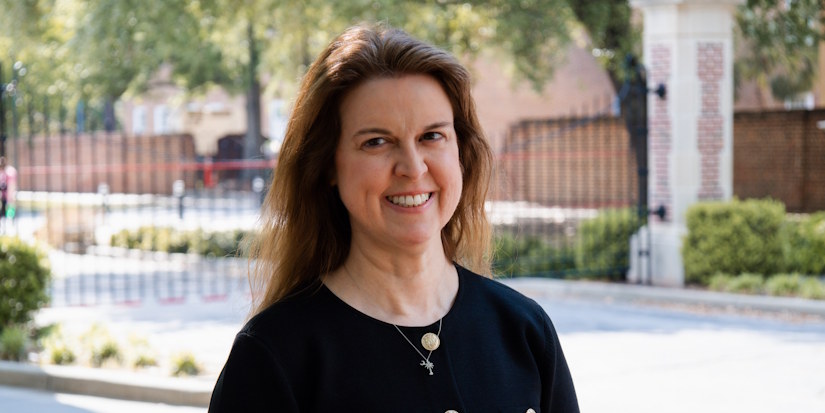
Rebecca McNair never imagined she would pursue a master’s degree more than 20 years after completing her Doctor of Medicine at USC. But two decades as a physician led the Florence native to become more and more curious about understanding the major health care systems where she worked for many years.
“I became interested health administration after experiencing and witnessing instances of disconnect between physicians and health administrators as well as physician burnout in the discipline,” McNair says. “I decided to get an MHA to better understand why these issues were happening and to see what I could do to lessen the impact in the future for my colleagues.”
McNair was particularly encouraged by her former medical director, Dr. Judy Chontos, who had previously graduated from the Department of Health Services Policy and Management’s (HSPM) Master of Health Administration (MHA) program. With Chontos’ support and that of her husband, Will McNair, she knew that the Arnold School was the right place for this degree. In addition, the program’s Executive Track offered weekend classes – making it possible for her to continue working full time as a family physician for USC Student Health Services and as an attending for nurse practitioner and athletic training students.
This degree allowed me to see health care issues now from the administrator’s viewpoint; by seeing this viewpoint from both the physician’s and administrator’s perspective, I am better able to be in a position to be a liaison between these groups, fostering an understanding between them, and helping the two sides agree for the betterment of health care.
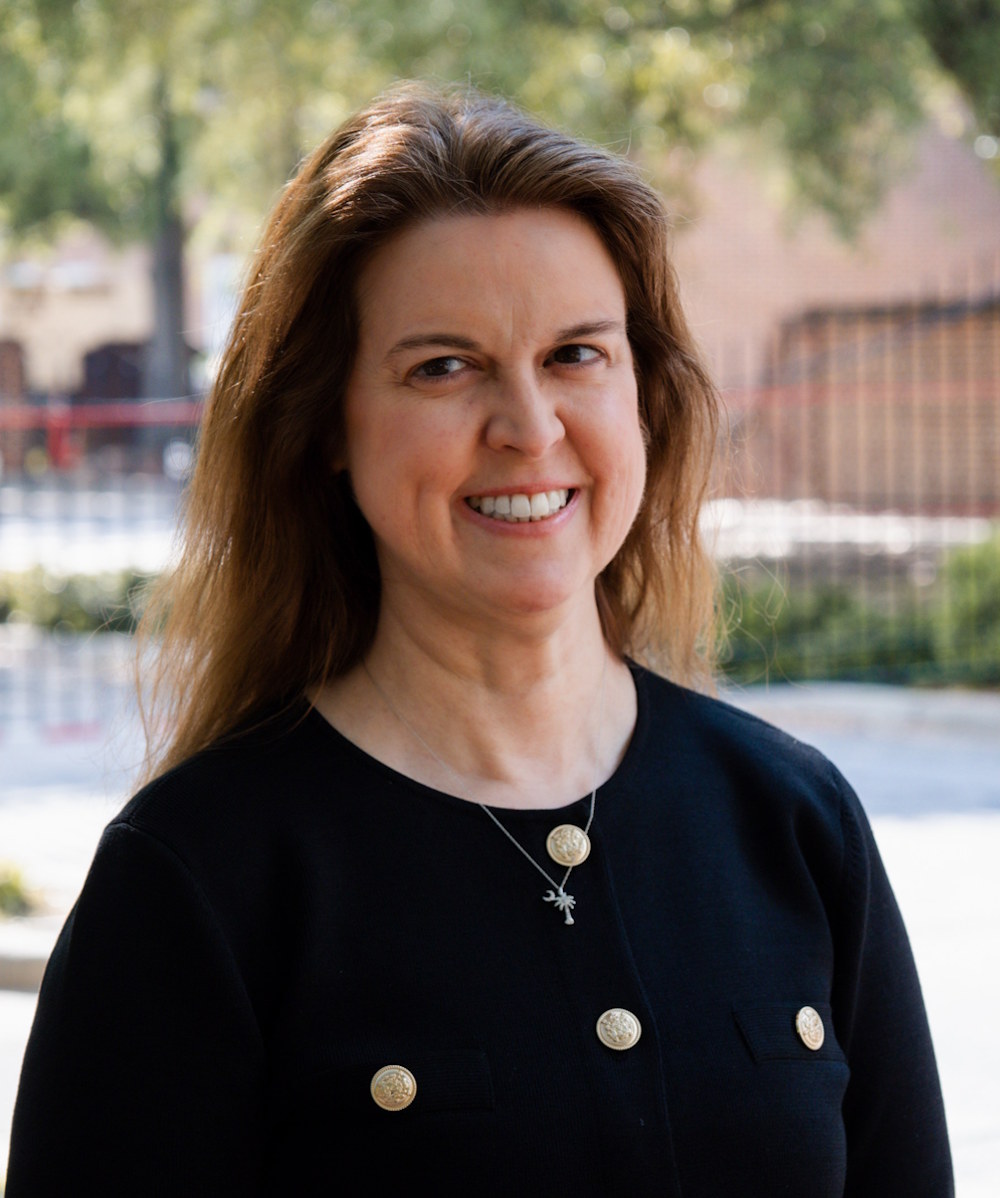
“My work experience definitely helped me understand and appreciate the various issues that were taught in my classes, and it showed me that it was not too late to get a degree if it is truly wanted,” says McNair, who also appreciated the support and various perspectives offered by other students in her cohort, who each held different talents, knowledge and learning opportunities. “For any experienced health care worker out there wanting to know more about health care administration, do not think you are too old to get an MHA degree. Your work experience will only help you master the concepts taught in the program.”
In addition to Chontos, she found mentors in HSPM faculty Nabil Natafgi and Bankole Olatosi as well as Arnold School MHA alumni Ed Bell and Jay Hamm. She says these individuals taught and exhibited what positive, productive health care administrators should be: knowledgeable, patient, comprehensive, empathetic and confident.
The May graduate is already able to apply her degree to her day-to-day work as a physician. But she also hopes to enhance health care even further by serving in a liaison position between medical providers and administration.
“I hope to represent medical providers to health care administration by being their voice so that they know that they are being heard,” she says. “This degree allowed me to see health care issues now from the administrator’s viewpoint; by seeing this viewpoint from both the physician’s and administrator’s perspective, I am better able to be in a position to be a liaison between these groups, fostering an understanding between them, and helping the two sides agree for the betterment of health care.”
Health Services Policy and Management (HSPM) is an interdisciplinary field concerned with the promotion of personal and public health through planning, organizing, directing, controlling, coordinating and evaluating health services.

The Arnold School is proud of our 2026 graduates, who will go on to change the world locally and globally. Learn about some of the other outstanding individuals who completed one of our 40 programs this year.